
change

“I have to constantly re-identify myself to myself, reactivate my own standards, my own convictions about what I’m doing and why.” ~ Nina Simone
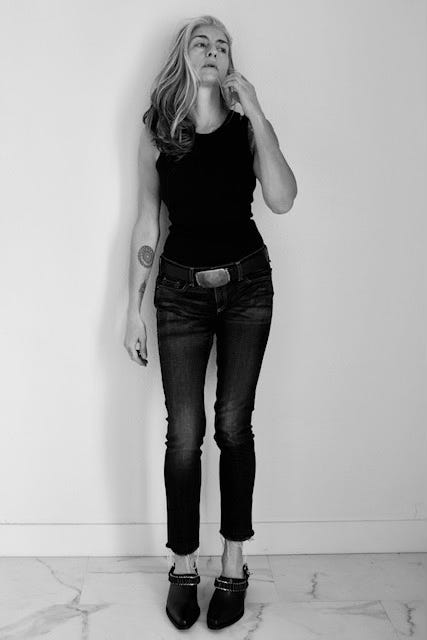
Life ask of us to change with time and circumstances, it is asking consistently. To change and adapt, be flexible, to learn and grow, but also to deeply and more utterly transform along with some personal inquiries, insights, and significant life events. One view of human behavior states that people do not actually ever truly change, that they can’t change. I don’t believe this to be true. Yes, we do tend to behave and respond similarly to corresponding circumstances, as we develop certain behavioral patterns and habits, throughout life. We all seem to want to change, and at the same change is incredibly difficult. It seems that the older we get the more difficult it becomes to change what we eat for breakfast, let alone some personal traits and hardcore beliefs. However, it is possible to change these patterns. Most importantly, I strongly believe that everyone has a capacity to change, but if they will indeed change depends solely on them and their conscious decision to do so.
Additionally, change often comes in small subtle ways that can be invisible to the outer eye, often even invisible to ourselves. Many people are not aware of these changes unless they are very dramatic and drastic. Most of my clients, for instance, can drop from time to time into a space of a mild desperation as they are unable to see how therapy has changed them. Happens to me, as well. Change is not always so gross and obvious. And, even when it looks like it is, when it looks like someone “made it” overnight - it is not an overnight thing, but rather a sum of small continuous attempts and tryouts when no one paid attention to it, which in the end can look like someone pulled a one eighty. In reality, though, they accumulated small little steps that created a significant-looking change in the end.
I have read in a book recently something about metal, and materials in general, and how their hardness is measured. It’s been written that “toughness is a material’s ability to absorb energy without rupturing or fracturing - that is, to resist strain while under stress… It is possible for a material to be hard but not tough - a diamond, for example, doesn’t easily scratch but would shatter if you took a hammer to it…” How can this be translated to us humans and our ability to change and mend and adapt and, eventually maybe, break under the forces of the life? What can it tell us about our ability to respond to the requirements of life and the world around us without necessarily being easily broken and raptured? What things and events could merely produce a scratch and which ones would shatter us?
Furthermore, the book speaks about strength of a material. “To be strong is to resist damage. There are two measures of the strength of a material. Yield strength measures the amount of force required to initiate the deformation of the material - to start bending or warping it. The yield strength of a material represents the point up to which it can remain itself, unchanged by the forces of the world.” How much of life can we endure, as humans, while staying our old selves, unchanged, inflexible, rigid and without bending, and deforming, changing or transforming? How much of injury and destruction can we withstand?
“Tensile strength is a measurement of the force required to break a material. Some materials have high yield strength but low tensile strength, which means they can resist a great deal of force, but once the force alters them, they can’t hang on for very long.” How long can we resist the change and fighting to remain the same under the circumstances and pressure and requirements and life and its events? What is each of our’s individual breaking point? How long can we hang on for before we, indeed, do break? What does breaking mean in the human world and is it necessarily always a bad, negative thing or could it maybe be an opportunity in disguise? Isn’t breaking sometimes needed in order to initiate a significant change?
I can’t say that I remember in detail and with clarity many significant changes in myself, certainly not that many until I was in my mid thirties. I didn’t even know who I was prior to that time! (well, it’s not to say that I fully know that today, either) True, there was no lacking in the amount of events in my life since the very beginning of times, things always seemed to be… happening - some exciting and positive, and others disturbing and sad and horrific. Things were happening inside of myself, most of the time, even when life seemed to be a smooth sailing. Still, I can’t say that I have changed that much in my personality and behavior in those early years. I was changing boyfriends and hair style, mostly. And, plus, I have always been a slow learner, so it would have taken me a lot more to embrace change than simply being hurt by an experience. Well, that, and also deep down I know I have enjoyed my mistakes, in addition to somehow being wired to be making them over and over again.
The truth is, I was always resourceful and would easily find ways to deal with the stresses of life and the world around me. I didn’t feel comfortable feeling my feelings - and I had a lot of them since I can remember - plus, I have never been comfortable in my skin, so I chose different methods that would take me out of myself - either through movies, fantasies, friends, and food, or later drinking and using substances, coffee, sex, intrigue and romance, etc. It was helpful and very much needed to use some of these strategies from time to time as life can be brutal; however, some of these became a habitual response and have limited my opportunity to live fully the experience - no matter what the experience is. For a while, these choices limited me to learn from the experience, and change my own approach to life.
“You can’t help with who you are and where.” ~ Michael Meade, Living Myth Podcast
When I was six years old I lived with my parents in Northern Africa, in a remote village of Libya. We stayed there for two and a half years, living close to a hospital where my parents worked at. I stayed at home during the day as I was homeschooled, while my parents worked. On Fridays we’d all be exploring the infinite Sahara desert and nearby villages and sites. I played with both local and the foreign kids, and, for the most part, I was a tomboy running around with boys and riding my bike. The desert is so dry, it rained briefly twice in two and a half years we lived there. Being exposed to such a different environment from the only one I have known prior to moving there must have initiated a significant change in me and how I view the world today, as well as my cultural sensitivity, my interests and preferences. I have always thought that I had the best possible childhood in those two and a half years. After that experience, I have known with so much clarity that diversity - of any kind - deeply attracts me. Later on in life, I have discovered that I absolutely need to live around it - be it through living in different places and merging with the local culture or simply through searching for novelty in everyday life. And, this is how I have been choosing to live for decades. I can’t tell if I would have been that way without the Northern Africa experiment, but I certainly cannot rule it out as it is something that deeply touched my heart.
I was born in Yugoslavia in the late seventies. In the early nineties, when I was only twelve years old, a civil war broke out in my country, having in consequence a significant amount of destruction, death and migration of people who lost everything, aside from sanctions, terrible inflation periods and poverty. Not to mention grief, fear, disappointment, confusion and terror amongst people. When it ended, five years later, my country was split into five separate autonomous territories and suddenly it became a distant memory of what life - of brotherhood and unity - used to look like once. Hatred, conflict, anger, loss, grief, confusion, sadness, devastation… I was young and I don’t remember fine details from this period, but I have memories of devastation and grief. I also know that our bodies remember. Our bodies store all those painful things we couldn’t cognitively understand at the young age, those feelings that we didn’t yet know how to digest and process, as well as things we have witnessed, heard or been told repetitively. All this stays with us, deeply affecting not only our bodies, but our minds and our core beliefs as well, changing us one way or another accordingly.
In the year of my twentieth birthday, there was a lot of death and destruction around me. One of my closest friends have taken her own life, a relationship I have found myself in became too quickly too destructive, toxic and turbulent, and on the top of all that my country was bombed for almost three months. Naturally, people were scared and at the same time furious and confused, and there were protests everywhere. Fear, loss, grief, rage, confusion, daily stresses, powerlessness and hopelessness, just to name a few emotions. I would spend most of those days playing cards, smoking weed, and drinking with friends - it was just a way to deflect from a rather heavy situation and avoid feeling the feelings I did not understand. Schools and universities were closed, water and electricity shut down for hours each day, and in order to get to work people had to avoid bridges and commute using barges on the river. Something died in me that year, I am certain of that. In the attempt to deal with all of the circumstances and outer forces of life, I have become somewhat removed, numb and flat; especially to the pains of the world around me. For a while I could not access that warm, fuzzy, soft, carefree, empathetic part of my self. Death, loss and destruction suddenly became something I was used to and, even more so, habituated to. A part of me died that year, and I have been without it since.
“One does not become enlightened by imagining figures of light, but by making the darkness visible.” ~ Carl Jung
All these events happened before I even turned twenty. What fascinates me the most is that I spent fifteen years afterwards living my life without the complete awareness of their effects, without allowing for the darkness to come to the light and my awareness, to become visible. Today, almost thirty years later, I know how natural this is for most people. We spend a lot of time distracted and unaware, consciously working on forgetting about the darkness, about difficult and painful events, and all this in order to preserve ourselves and our sanity, and continue to function in the world - the world which is insane and dysfunctional. Spending all those years dissociating and not feeling those heavy feelings… it’s not surprising to me at all that it took a while for the aftermath to find me. It feels like it took one brief moment in which I actually allowed myself to pause and relax, to exhale and take a deep breath in. And then, it all hit me. It collapsed. All at once, seemed like it. This happened somewhere in my mid thirties; more precisely, when I got sober. Not immediately, but very soon. I have written about this a lot in the past, and yet somehow I often still can’t believe it - the very different lives I have lived in this one life of mine.
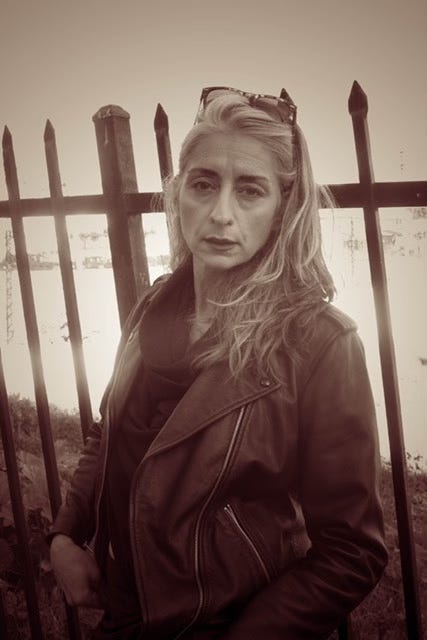
The desire to stop feeling my feelings and avoid my “real” life started very early. This is the case with most addicts. It’s like you know you are somehow different from “normal” people, but maybe you are not yet sure in what way. There is this discomfort in being who you are. An itch, and the obsession to fill up the hole in yourself with things, behaviors, with other people. It is a compulsion to get out of yourself and find the fix, that something outside of you that will fix you and make you feel all better. The “drug of choice” doesn’t matter; what matters is the principle, the mechanism of addiction. All addicts share it. I have joined a twelve step program when I was too exhausted and desperate to continue living my life the way I did. It wasn’t exactly the matter of life or death for me, at least not a literal death. It was, however, a matter of a spiritual death and a deep, deep desperation. I didn’t know what else to do, I have exhausted all other possibilities and simply could not continue living the only way I knew how to. But, I also didn’t want to get sober for a small shitty life, I wanted a big life - marvelous, joyous and free. I didn’t know, at the time, that recovery wouldn't mean a life without pain, as pain is inevitable. It also wouldn't mean an extravagant life without daily stresses. It would simply mean that I’d find different ways to work with pain, to understand it, honor it, be with it - instead of finding an immediate relief in substances or people, in avoiding and distracting.
Sobriety did change me. It has been a work in progress, though. It still is. And it will remain so. It sobered me up - literally - so I was able to see myself for who I really was; at least as close to that idea of me as possible. It enabled me to start the process of recovering the long lost connection with my true self. I was able to see my own patterns and how they affect my life choices and the way I choose to live. I was able to see the mistakes I made and used to blame others for. I have also been able to see the ways I have allowed others to hurt me and violate me, and my own insecurities in setting up better boundaries. I have been seeing how my whole sense of Self is still very much dependent upon others and how they see me. How my own sense of self worth relies mostly on how much I am accepted, valued, desired, and acknowledged by others (mostly men and mostly in intimate relationships). I can say, with clarity, that since September 2014, it’s been a very different life. And, although I am somewhat used to it after all these years, and I am certainly claiming it - still, it feels like someone else’s life at times. I often don’t know what to make of it. It’ll take some more time…
Probably the biggest influence on my individuation process, and, most importantly, my development as a woman and reconnection with my feminine side, has been coming from a lifestyle I have immersed myself into for the past several years, and a livelihood I have chosen. What has been happening in my life and opening up internally in the last three years, keeps on not only shading the light on some painful old wounds and challenging me in a complete new way, but also empowering me in ways I haven’t experienced before. I can feel the shift, viscerally. And, even when I fall back in old patterns - and I do this, so often - I can catch myself in doing so. Maybe I course correct, maybe I just give myself some compassion for it, but certainly I notice it. Inner critical voice is still here, just sometimes a bit quieter.
I have heard in a podcast the other day that living, itself, is a creative art. We are creating our experience every day, moment to moment. The way we interpret life is a creation of a kind, it’s an opportunity in which we can take a different stand, in which we can allow for change to happen. Patience to develop. And, this understanding of a universe as being a participatory system, as opposed to something that simply happens, something that dumps things on us, gives me a lot of hope.
So, cheers to change!
“You get a strange feeling when you’re about to leave a place. Like you’ll not only miss the people you love but you’ll miss the person you are now at this time and this place because you’ll never be this way ever again.” ~ Azar Nafisi, Reading Lolita in Tehran
Thank you for reading me, following me, liking my posts, commenting… and for your subscription!
If you feel inspired, touched or moved,
If you feel seen, heard or understood,
If you find my offering in any way relatable, insightful or useful,
Or if you simply feel called to buy me a cup of coffee,
Feel free to offer me a tip - PayPal me or Venmo me @Makikat.
You can also upgrade your subscription to a paid membership anytime. I am profoundly grateful to those who choose to support my work through financial contributions.
Until we meet again,
Marina